
Why Wrist Wearables Miss Your Form—and What to Do Next
Wrist trackers capture effort, not mechanics. Learn the biomechanics blind spots and practical ways to measure movement-quality for safer lifting and better training.
1) The wrist is a great pulse check—but a poor biomechanics camera
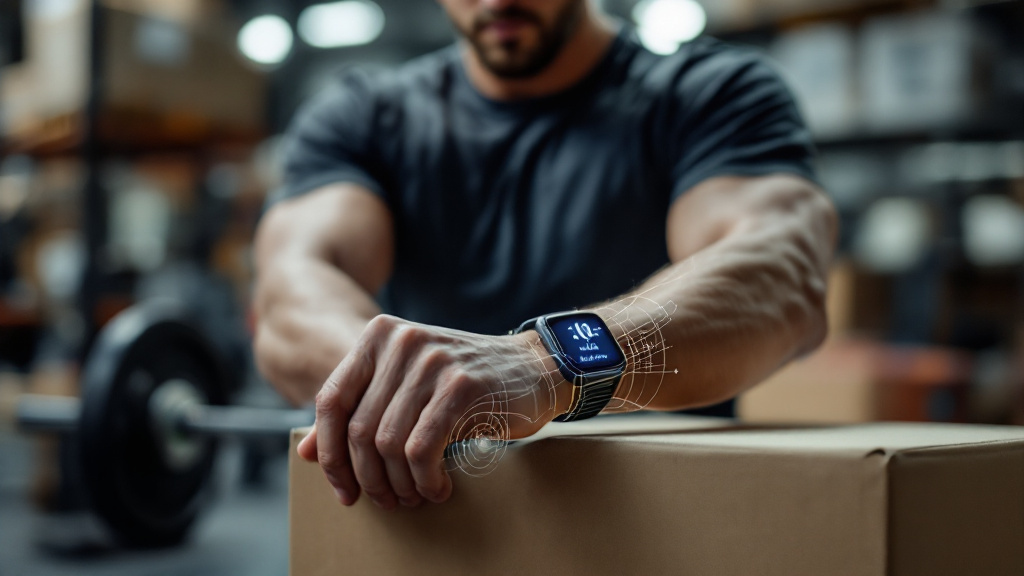
Wrist wearables excel at what the wrist can proxy: heart rate, cadence, general activity, and rough workload. But when the goal is movement-quality—how you lift, hinge, brace, and rotate—wrist data often collapses the story into a single point in space. That creates a biomechanics blind spot: you can rack up steps and “active minutes” while gradually drifting into compensations that increase tissue strain.
Most form breakdown happens closer to the body’s load paths: trunk stiffness, ribcage position, pelvic control, scapular mechanics, and left–right asymmetries. A wrist sensor can’t reliably see subtle trunk rotation during carries, a rounded-shoulder posture during desk work, or an unsafe lifting pattern where the spine flexes while the hands stay “normal.” That’s why injury-prevention programs often fail when they depend on wrist-only metrics: the signals you need for coaching (posture, hinge depth, torso angle, symmetry) simply don’t show up in steps or heart rate—especially under fatigue.
2) The movement signals that matter for safer lifting and better training
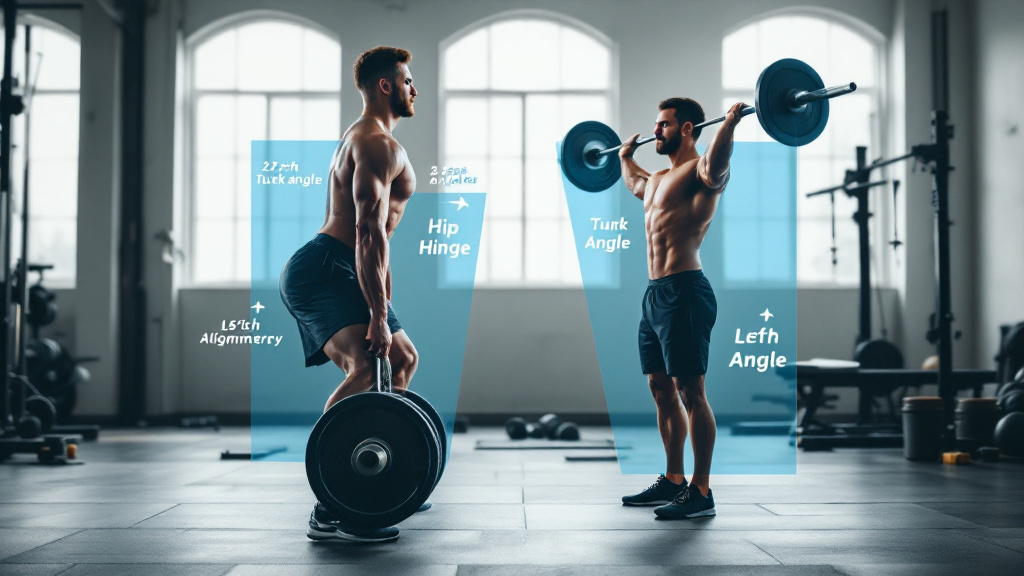
For both gym training and on-the-job lifting, the highest-value signals aren’t “how much you moved,” but how you organized your body to move. In practical biomechanics, that means tracking trunk stability (bracing and ribcage-to-pelvis alignment), hip hinge vs. spinal flexion, shoulder/scapular position, and left–right asymmetries. These are the variables that predict whether load is shared across strong tissues or concentrated in vulnerable ones.
Consider a common workplace scenario: the hands stay close to the box and the smartwatch sees steady motion, yet the torso subtly rotates and the shoulders round as fatigue rises. That combination—rotation plus flexion under load—is a classic recipe for back and neck irritation, even if your heart rate looks “fine.” Similarly, in strength training, two reps can look identical by tempo but differ dramatically in bar path control, trunk stiffness, and knee-valgus drift. If you want true injury-prevention and better technique, you need sensors that can detect posture, segment angles, and compensations—not just wrist acceleration.
3) What to do next: capture full-body context without a lab (or a device pile-up)
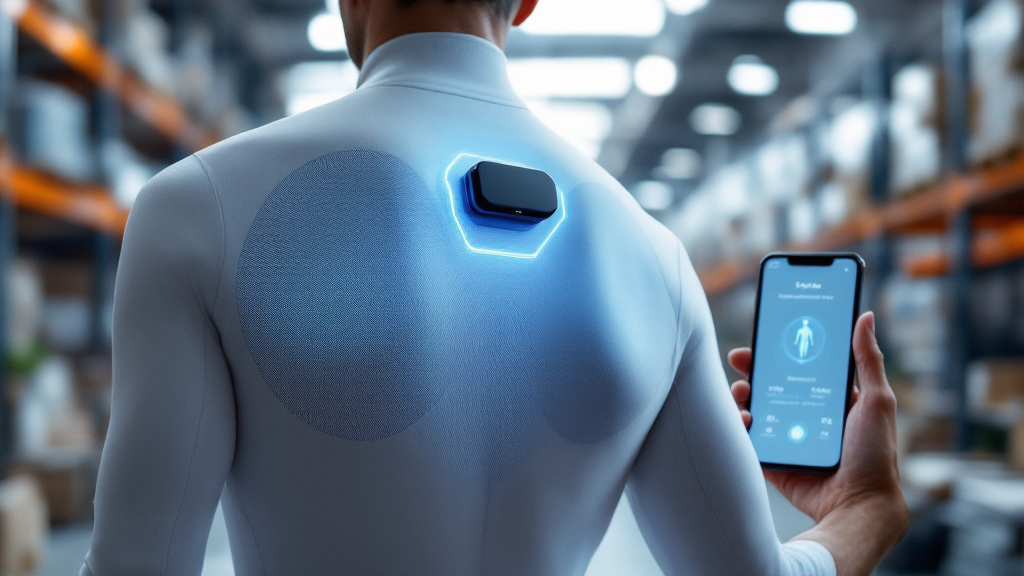
You don’t need a motion-capture lab to improve form, but you do need full-body context and feedback that arrives in the moment. Camera-based apps can help, yet they’re angle-dependent and rarely practical mid-shift or mid-set. Multi-sensor rigs add friction: more charging, more pairing, more forgetting. The sweet spot for wearables and training is a system that’s comfortable, washable, and always in the right place to measure trunk and shoulder mechanics.
That’s the bet behind smarttextiles like KineticWeave Systems: everyday garments with embedded fabric sensors and a removable electronics pod. A short in-app fit calibration sets personal baselines, then edge AI runs event detection on-body to catch slouching, rounded shoulders, unsafe hinge patterns, or fatigue drift with low latency. When form degrades, the garment can deliver an immediate haptic cue—turning measurement into real-time behavior change—then sync a summary via BLE for coaching insights and trend tracking. For movement-quality and injury-prevention, the next step is simple: measure where mechanics happen, and close the loop with timely feedback.